Posts

Showing posts with the label flowers

Flowers - Zinnias

Image
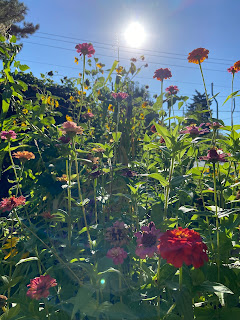
  This year I planted a whole packet of Zinnias in our garden and it’s beautiful!!! I love Zinnias. There are so many colors and they just keep blooming. They are great for the pollinators and for keeping color in your gardens all summer and fall. They have quickly become one of my favorite flowers! If you’d like to know more about these beautiful flowers you can read it in this  Post - Zinnias . What are your favorite flower(s)? 

Spring Flowers

Image
  I am so happy it's spring.  I love all the beautiful flowers and colors.  It's wonderful.  So here are a few spring flowers for you to enjoy.

Tulips

Image
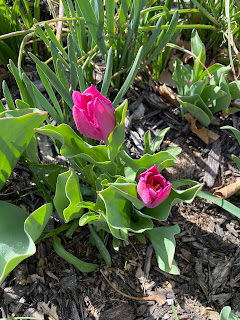
  We have had tulips growing in our front yard since we moved to this house in 2011 (they didn’t bloom until spring 2012). There were only red and yellow. We’ve added a lot more, although some only bloomed once, which is weird. Did you know: There are over 150 species with over 3,000 different varieties. The flower buds are almost perfectly symmetrical. Most of them only have one flower, but there are a few varieties with 2-4 flowers. They only bloom for 3-7 days in the springs. They are part of the Lilly family. They come in almost every color. They are native to Central Asia. They became popular after reaching The Netherlands. It’s the symbol for The Parkinson’s Disease Foundation. They used to be the most expensive flower. In the 1600’s in the Netherlands they cost 10 times the average salary, which made them more expensive than some houses. From 1634-1637, when it was most expensive, this time was known as “Tulip Mania”. Their petals are edible and can be used in place of onion...

Bulb Flowers

Image
 All Bulb flowers; like gladiolus, lilies, tulips, daffodils, etc.; can’t be cut or get broken or they won’t come back.  These flowers send all that they have, nutrients and energy, into growing flowers. So, if you cut them or they break off, the flowers take everything with them. Leaving nothing for the bulbs. In order for them to get it back, the flowers have to die while still connected to the bulb, which sends everything back into the bulb so they can grow flowers for many years. We wait until the flowers have turned brown, hard, and are easy to pull out.

Disappointed With This Flower

Image
  In November we found this beautiful  Moonstone Orchid  at the grocery store.  It was so pretty and I loved the colors. Well, when it bloomed again it looked like this... I said in  This Post  that there are several different reasons as to why the orchids change color.  After reading everything on the tag, I found out that this company dyed them to be this color.  UGH!!!  Why?  I wanted my orchid to always be this color, not just once.  So, make sure that when/if you go to buy an orchid because of it's color it's not dyed and that is it's true color!

Spring

Image
  Today is the first day of spring.  Yay!!!  I am so happy to have spring here.  Now, that doesn't mean we won't be getting anymore snow.  Utah is known for having snow clear until April, sometimes even in May.  But... for the most part we can start planting our garden and getting our seedlings going inside to plant outside after our last frost (which is in April this year!). For our photo challenge today it’s signs of spring. Well, I woke up today to rain. Lots and lots of rain. I am so grateful for the rain. I was just hoping today would be sunny and a little warmer. Although spring usually brings lots of rain. Lol! But, it might be sunny later today! Anyway… Here are the signs of spring around here...

Plant a Flower

Image
Tomorrow March 12 is national plant a flower day.  Since it's a Sunday, I decided to plant a flower today and make that for my photo challenge. I love flowers.  They lift my spirit, make me happy, and bring joy to my day. Some of my favorite flowers are zinnias, sunflowers, roses, calendula, gladiolus, tulips, daffodils, and cosmos. Did you know that each month has a different birth flower?   Here they are: Birth Month Flowers January - Carnation or Snowdrop February - Violet, Primrose, or Iris March - Daffodil or Jonquill April - Daisy or Sweet Pea May - Lily of the Valley or Hawthorn June - Rose or Honeysuckle July - Larkspur or Water Lily August - Gladiolus or Poppy September - Aster or Morning Glory October - Marigold or Cosmo November - Chrysanthemum or Peony December - Narcissus or Holly They each have a meaning too. January - Love, Admiration, and Devotion February - Love, Faithfulness, Modesty, and Virtue March - Prosperity, Rebirth, and Cheerfulness Apr...
Dr. Seuss Plant

Image
Today for our photo challenge it’s a plant that would come out of a Dr. Seuss book. It’s Dr. Seuss birthday. He was born in 1904.  We have grown a few plants that could have come out of a Dr. Seuss book. Today I chose an orchid. It looks so fun and whimsical that they totally could have been in a Dr. Seuss book. This orchid was pink and blue when we bought it you can see it  In This Post  but now it’s just white. I read that light, temperature, and environment can change the color of the orchids, but also the stores dye them. Which is frustrating if they dye them. I paid for a pink and blue orchid, not a white one. Ugh… anyway, they still look like from a Dr. Seuss book.

Summer

Image
  I am so excited for spring and summer. I’m doing my best to enjoy winter, snow, breath in the cool air, have the fun light from the fireplace going, the heater on, cuddle in blankets, but I am missing spring and summer! How about you? So here are a few pictures to get us through…

Bee Balm

Image
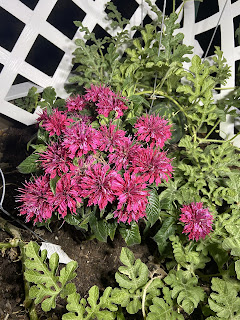
  Do you know anything about bee balm? Do you know the benefits of bee balm? If not, here is a post for you. I’m going to be sharing all the info I can find about bee balm. Information about Bee Balm: It’s a perennial native to North America. They are usually 2 to 4 feet tall and grow in clusters. Their cheerful flowers resemble fireworks. The flowers come in white, pink, red, and purple colors. They attracted pollinators such as bees, butterflies, and hummingbirds. Which help the rest of your garden. They are part of the mint family, so it’s edible. Benefits of Bee Balm: It helps repel squash bugs and mosquitoes. It’s contains antiseptic, antibacterial, analgesic, antioxidant, and antifungal properties. The leaves can be applied to the skin or made into a salve to help heal minor wounds and infections. It can also help bring down the inflammation from a bee sting. When the leaves and flowers are made into a tea, it can help relieve headaches and digestive issues.

Spring Flowers

Image
  I try to find joy in all the seasons.  I love being able to live in Utah where we get snow, rain, sun, fall colors, and the excitement of new beginnings.  I enjoy the different smell in the air that each season brings. The sun is shining today, and I am so excited for the spring.  So, I wanted to share some of our spring flowers...

Zinnias

Image
  Zinnia flowers are so pretty! I love growing them! Did you know: 🌸 They are in the aster or daisy family 🌸 They are named in honor of Johann Gottfried Zinn, who was an 18th century botanist. 🌸 There are over 20 different species that grow in the wild, but with their popularity they have been bread in to hundreds of hybrid species. 🌸 They are annuals. 🌸 They bloom in summer and fall. 🌸 If you dead head (cut off the dead flower) it will grow more flowers and bloom all season. 🌸 They attract pollinators, especially butterflies. 🌸 Spidermites, aphids, and whiteflies will damage them. 🌸 They need to be in Full Sun. 🌸 To save the seeds, let the flower die. Carefully pull out the dead petals. The seeds will be at the end of the dead petals. If you are dead heading and want the seeds, make sure it’s completely dry before you cut it off. Then you can pull the seeds out and store in a cool dry place. 🌸 There are three main types: Single Flowered - single row of petals and a visi...